
 EN
EN  RU
RU Toraghay: The Largest Mud Volcano on Earth
Toraghay, in Azerbaijan's Gobustan region, is the largest mud volcano on Earth. Here's its scale, its craters and how to reach the summit on a day trip from Baku.
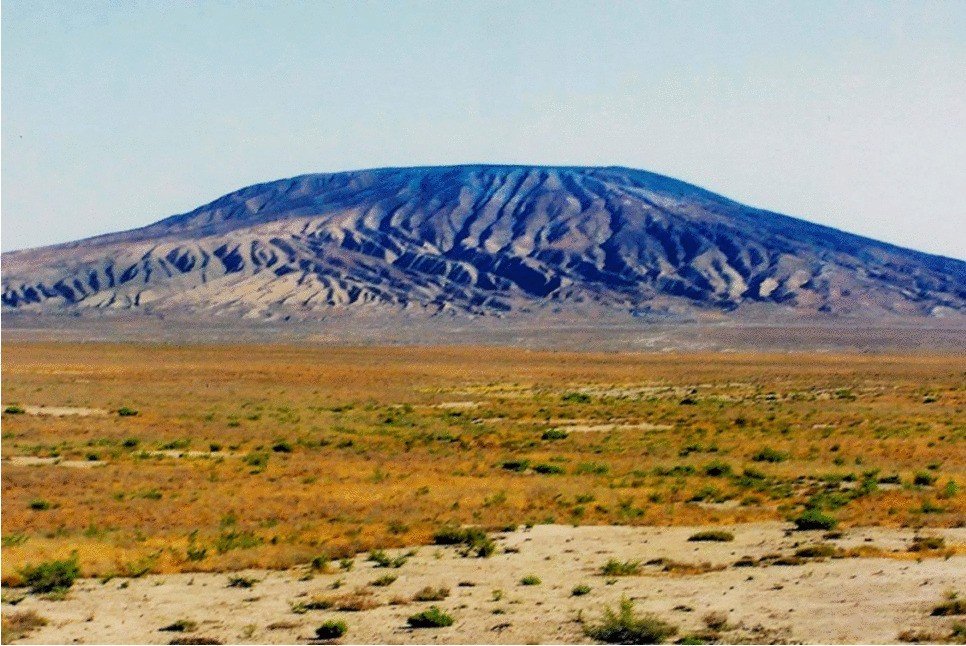
Azerbaijan is famously the "Land of Fire", but it could just as easily be called the Land of Mud. This small Caspian nation is home to nearly half of the world's mud volcanoes, a geological spectacle you won't find anywhere else. Among these bubbling giants one stands supreme: Toraghay, recognised as the largest mud volcano on Earth and one of the most extraordinary natural sights in all of Azerbaijan.
A Geological Giant in Gobustan
Rising close to 400 metres above sea level in the semi-desert of the Gobustan region, Toraghay is a vast cone that dominates the skyline. Its scale is hard to grasp until you stand at its base: the volcano has a footprint several kilometres wide and is crowned by multiple active craters. Unlike the smaller, easily reached mud volcanoes nearby, Toraghay demands real effort to climb — and rewards you with isolation and raw, otherworldly beauty.
Active Craters and Cold Mud Eruptions
The summit craters periodically erupt with cool, saline mud, sending fresh grey flows down the slopes that glisten in the sun like silver rivers. There is no fire and no heat — mud volcanoes are driven by deep gas and groundwater pressure rather than magma. For geologists, Toraghay is a living laboratory offering a window onto the hydrocarbon deposits far beneath the Caspian basin.
How to Visit Toraghay on a Day Trip from Baku
Reaching the summit of Toraghay is a rite of passage for hikers in Azerbaijan. The trek usually starts near the Gobustan Rock Art Museum and crosses a landscape that feels more like Mars than Earth, with the silence broken only by mud bubbling from a distant vent. It is a demanding full-day route, so most visitors go with a guide who knows the terrain. We run a dedicated Toraghay Mud Volcano Hiking Tour that covers the full 30 km journey from Baku with expert guidance — a true highlight among our tours in Azerbaijan.
Best Time to Visit
Spring (March–May) and autumn (September–November) are ideal: the air is cool, the desert briefly turns green, and the long walk is far more comfortable than under the fierce summer sun. Summer hikes are possible but require an early start and plenty of water, while winter can turn the approach tracks to thick, impassable mud.
Why Toraghay Matters
Toraghay is far more than a mountain of mud. Listed in the Guinness World Records for its size, it is a symbol of Azerbaijan's unique natural heritage and a magnet for international researchers. Standing on its peak with the Caspian Sea on the horizon, you understand just how surprising this corner of the Caucasus can be. If you enjoy wild, off-the-beaten-path nature, pair it with our guide to the Shahdili Spit on the Absheron coast.
Frequently Asked Questions
Where is the Toraghay mud volcano?
Toraghay lies in the Gobustan region of Azerbaijan, in the semi-desert south-west of Baku, not far from the famous Gobustan Rock Art Reserve. It is roughly a 1–1.5 hour drive from the city centre, which makes it an easy day trip from Baku.
Is Toraghay really the largest mud volcano in the world?
Yes. Toraghay is widely recognised as the largest mud volcano on Earth, both in height (around 400 m) and in the size of its base, and it appears in the Guinness World Records.
Can you visit Toraghay on a day trip from Baku?
Absolutely. Because it sits close to Baku, Toraghay is almost always visited as a full-day trip. The hike to the summit and back is about 30 km, so most travellers join a guided tour that handles transport and navigation.
How hard is the Toraghay hike?
It is a demanding hike — around 30 km over exposed, uneven desert terrain, taking 10–12 hours. A good level of fitness, sturdy boots and at least 3 litres of water per person are essential.
Comments
comments_no_results
Be the first to share your thoughts!
Leave a Comment