
 EN
EN  RU
RU  AR
AR  HE
HE 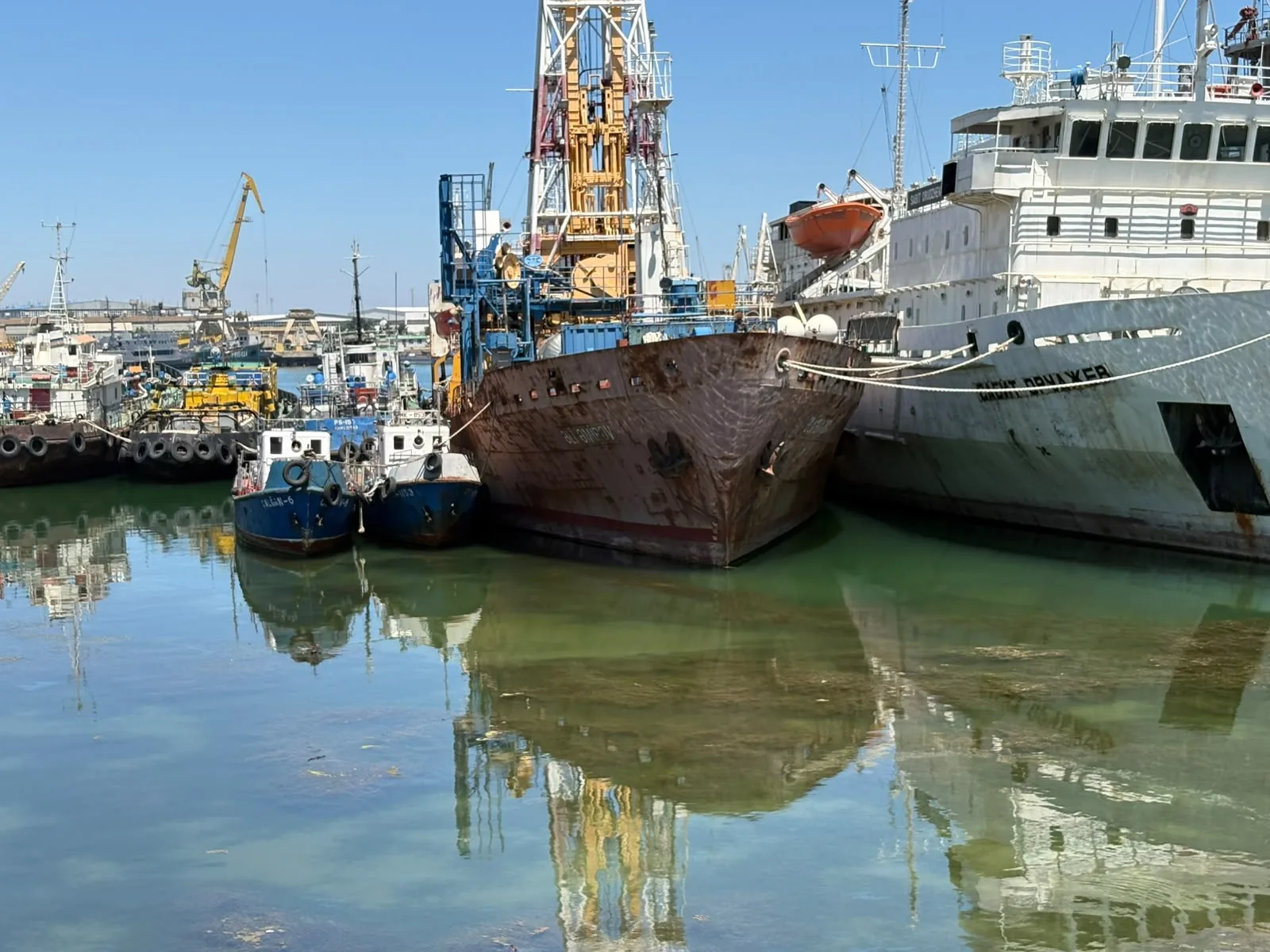
Two ships. Two endings. This is the deep-dive version of Baku's maritime story, built for people who want the engineering rather than the highlights reel. The whole route rests on one question: what happens to a Caspian vessel when its working life ends?
Tour overview
The first answer is preservation. You board the Surakhani, a 1957 Caspian tanker converted into Baku's ship museum, and go all the way down — below deck, through the crew quarters, into the engine room where the machinery is still in place. An official museum guide walks the route with you.
The second answer is limbo. Twenty minutes south, the Bibi-Heybat ship graveyard holds the vessels nobody scrapped: retired Azerbaijani ships still afloat at their moorings, rusting where they were last tied up, some of them for years.
A ship that was saved and a fleet that was simply left, on the same coastline, in one afternoon. Bring a camera you actually like.
Quick facts
- Duration: about 3.5 hours, or about 4.5 with the optional lunch
- Ships covered: 2 — one boarded, one photographed from the quayside
- Museum access: below deck, crew quarters, engine room, bridge, VR exhibit
- Time on the Surakhani: about 1.5 hours
- Time at the graveyard: about 1 hour, timed for the light
- Group: kept small — the engine room does not hold large groups
- Museum entry: included
Phase one — guided excursion at the Surakhani ship museum (about 1.5 hours)
Above deck: the vessel and the fleet
We start on the main deck, with the ship herself. The Surakhani was built in 1957 and worked the Caspian for the Soviet fleet, later the Caspian Shipping Company — ASCO today. She carried oil products across an enclosed sea with no tides, no ocean swell and no easy exit.
Caspian naval architecture solved a specific problem: shallow draft, heavy cargo, and brutal winter storms off Absheron. Your guide covers hull design, tonnage and the routes she ran. Baku to Astrakhan. Baku to Turkmenbashi. Baku to Anzali.
Below deck: crew quarters and the working ship
Then we go down. Most visitors to museum ships never see this part. The excursion takes you through the interior decks — crew cabins, mess, galley, and the narrow companionways that made a tanker liveable for weeks at a time. Fittings are largely original, and the scale is smaller than people expect.
This is where Caspian seafaring stops being abstract.
The engine room
The engine room is the centrepiece. Machinery, control panels and instrumentation remain in place. Your guide explains propulsion, fuel systems and how the engineers actually ran the ship, and interactive displays let you work the controls rather than read about them.
For anyone interested in marine engineering, this room alone justifies the excursion.
Bridge, navigation and the VR exhibit
We finish topside at the bridge. The subject here is navigation: charts, instruments, and how crews handled the Caspian before satellite positioning. The museum's VR exhibit puts you on the water — a reconstruction of a Caspian crossing from the wheelhouse, which is as close as most visitors will get to conning a Soviet tanker.
Museum entry and the official museum guide are both included.
Phase two — the Bibi-Heybat ship graveyard (about 1 hour)
The quayside
The contrast lands immediately. Where the Surakhani was preserved, these vessels were simply left. Cargo ships, tugs, offshore support craft and a drilling vessel sit at their berths, still afloat, still tied up alongside, going the colour of the seabed.
They are not being broken up, and that is what makes the site unusual. Decommissioning a merchant ship is expensive, and Caspian scrapping capacity has never kept pace with the number of vessels reaching the end of their service life — a pattern common across the former Soviet Union. So retired hulls stay at their last working port, sometimes for years, sometimes indefinitely.
This is a working port and oil-industry area rather than a promenade, so access is arranged and the group stays together. That is exactly why guided visits get closer than independent ones, which are usually limited to the overlook from Bibi-Heybat Mosque.
Identifying the hulls
Your guide works through what is in front of you. Ships recorded at the site have included the General Salimov, Nizami, Ashug Aleskar, General Mehmandarov and Gahraman Hasanov — several named after Azerbaijani military figures and cultural icons, including the 12th-century poet Nizami Ganjavi and the 19th-century ashug Aleskar.
The roster changes as ships arrive and, occasionally, are finally cut up. Photographers have documented the same hulls in the same berths across successive years, which is part of what gives the place its reputation. Part of the guide's job is telling you what each ship was, what it carried, and roughly when it stopped working.
There is a wider pattern here too: a separate and larger cluster of rusting vessels has long been documented on the shore of Nargin (Boyuk Zira) island, further out in Baku Bay.
Photography
This is the strongest industrial photography site on the Azerbaijani coast. Rust, salt corrosion and superstructure at close range, with flat Caspian water underneath and reflections that double every hull.
Late afternoon is the best window — the light turns the rust copper and the water goes silver behind it. Your guide knows the quayside positions that work and will time the stop around the light where the schedule allows.
Optional — seafront fish lunch on the Bibi-Heybat shore (about 1 hour)
Lunch is a few minutes from the moorings, directly on the water. A fish restaurant sits on the Bibi-Heybat shoreline with the Caspian filling the window: grilled Caspian fish, Azerbaijani mezze, tea afterwards. Kutum and levengi, the stuffed fish dish Azerbaijan is known for, are usually on the menu.
Photographers often take it deliberately — eat through the flat midday light, then return to the hulls when the sun drops.
What's included
- Surakhani ship museum entry ticket
- Official museum guide for the full below-deck excursion
- Engine room, crew deck, bridge and VR exhibit access
- Dedicated Tourister guide for the whole day
- Private air-conditioned vehicle
- Central Baku meeting point; hotel pickup possible, agreed in advance
- Arranged quayside access and an extended guided session at the ship graveyard
- Bottled water, fuel, parking and road tolls
What's not included
- Lunch at the seafront fish restaurant — optional add-on, or pay directly at the table
- Personal expenses and tips
- Boarding or entering any vessel at the ship graveyard. Those ships are not open to visitors; the stop is a quayside viewing and photography session. The only ship you go inside on this tour is the Surakhani.
- Drone flights — Baku's coastal airspace is restricted
- Bibi-Heybat Mosque interior visit — that stop is on our 4-point coastline tour
Who this tour is for
A good fit if you photograph industrial subjects, have an interest in marine engineering or Soviet-era shipping, or found the standard city tour too shallow.
Probably not for you if you want variety over depth — the 4-point coastline tour covers more ground — or if steep companionway stairs and narrow doorways are a problem.
Practical information
Duration. About 3.5 hours, or about 4.5 hours with lunch. Afternoon departures are recommended for photography.
Accessibility. The below-deck excursion involves steep companionway stairs and narrow doorways and cannot be adapted. The quayside is level.
Group size. Kept small. The engine room and crew decks do not hold large groups.
Before you go. Read our guide to the Baku ship graveyard at Bibi-Heybat, or browse every Caspian Sea tour in Baku.