
 EN
EN  RU
RU  AR
AR  HE
HE Caspian Sea Tours in Baku
3 tours · 22 traveller reviews · local guides
Baku is a Caspian city first and an oil capital second. The sea came before everything else — and it is still the reason the city looks the way it does.
For centuries, sailors from the Absheron Peninsula moved cargo across this water to Astrakhan, Anzali and Turkmenbashi. Then, in 1846, engineers sank the world's first mechanically drilled oil well at Bibi-Heybat, on the shoreline itself. Baku's oil boom followed within three decades, and oil rebuilt the fleet: steel tankers replaced sailing barges, and the Caspian Shipping Company — ASCO today — grew into the largest merchant fleet on an enclosed sea.
Nothing retires quietly here. Scrapping a merchant vessel is expensive, and Caspian scrapping capacity has never kept pace with the number of ships reaching retirement age — so retired hulls are commonly left moored at their last working port instead of being broken up. That is how the Bibi-Heybat ship graveyard formed: a rotating cast of Azerbaijani vessels rusting at their berths, year after year. The other half of the story is now preserved: a Caspian tanker converted into a walk-through museum, engine room included.
So there are two Caspians in Baku. One you sail. One you walk.
Two ways to meet the Caspian
- On the water — bay cruises and yacht charters leave from the Boulevard marina. No tides, and very little swell from April to October.
- On the coast — the ship museum, the first drilled oil well, Bibi-Heybat Mosque and the ship graveyard all sit on one road running south-west out of the city.
Baku's maritime timeline
- 13th century — Bibi-Heybat Mosque founded by Shirvanshah Farrukhzad II over the tomb of Ukeyma Khanum.
- 1846 — the world's first mechanically drilled oil well is sunk at Bibi-Heybat. Thirteen years before Pennsylvania.
- 1879 — the Nobel Brothers Petroleum Company forms in Baku and commissions the first purpose-built oil tankers.
- 1900 — the Absheron Peninsula produces roughly half the world's oil.
- 1936 — Soviet authorities dynamite Bibi-Heybat Mosque. It reopens in 1998 after a full reconstruction.
- 1949 — Neft Daşları (Oil Rocks) begins operating offshore: the world's first offshore oil platform city, built on trestles in the Caspian.
- Today — ASCO runs the largest merchant fleet on the Caspian, and retired hulls end their lives at Bibi-Heybat.
Getting around the Caspian coast
Everything sits on one axis. Baku Boulevard runs along the city-centre waterfront, and both the marina and the ship museum are there. From the Boulevard, the coastal highway heads south-west through Bayil, past Shikhov beach, toward Bibi-Heybat — roughly 10 km, around 20 to 25 minutes by car.
The oil well monument, the mosque and the ship graveyard all fall within the final 3 km of that road. Public transport reaches the mosque; it does not reach the graveyard shoreline, which is why these sites are almost always combined by vehicle.
Curious about the wrecks before you go? Read our guide to the Baku ship graveyard at Bibi-Heybat.
Our tours
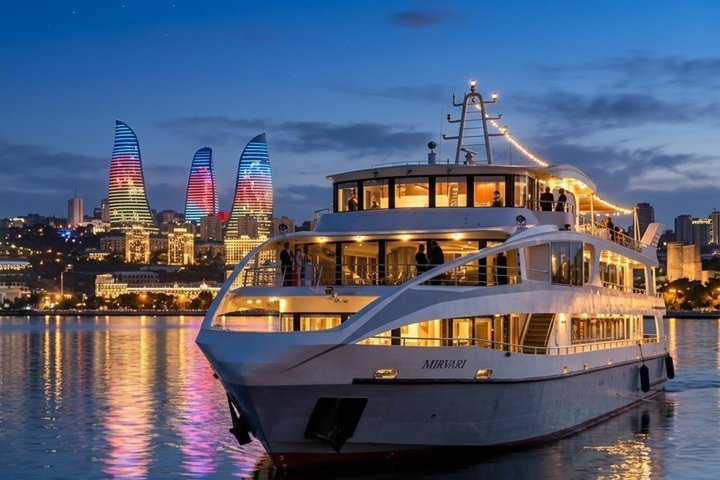
Baku Boat Tour: Premium Caspian Sea Cruise
- 35–40 minutes
- Max 10
- Group
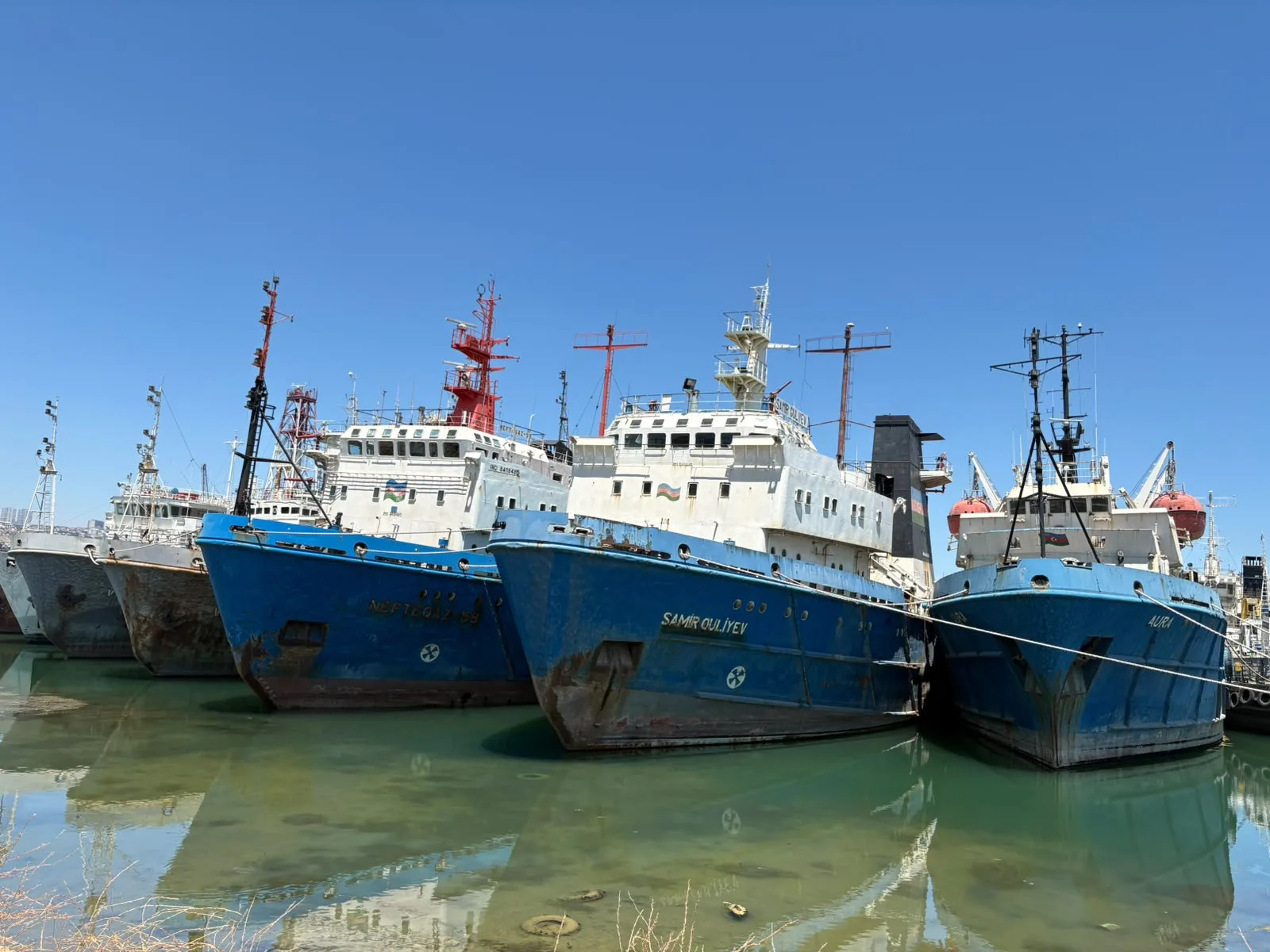
James Bond Oil Field, Bibi-Heybat Mosque & Baku Ship Graveyard Tour
- About 4 hours
- Max 15
- Group & private
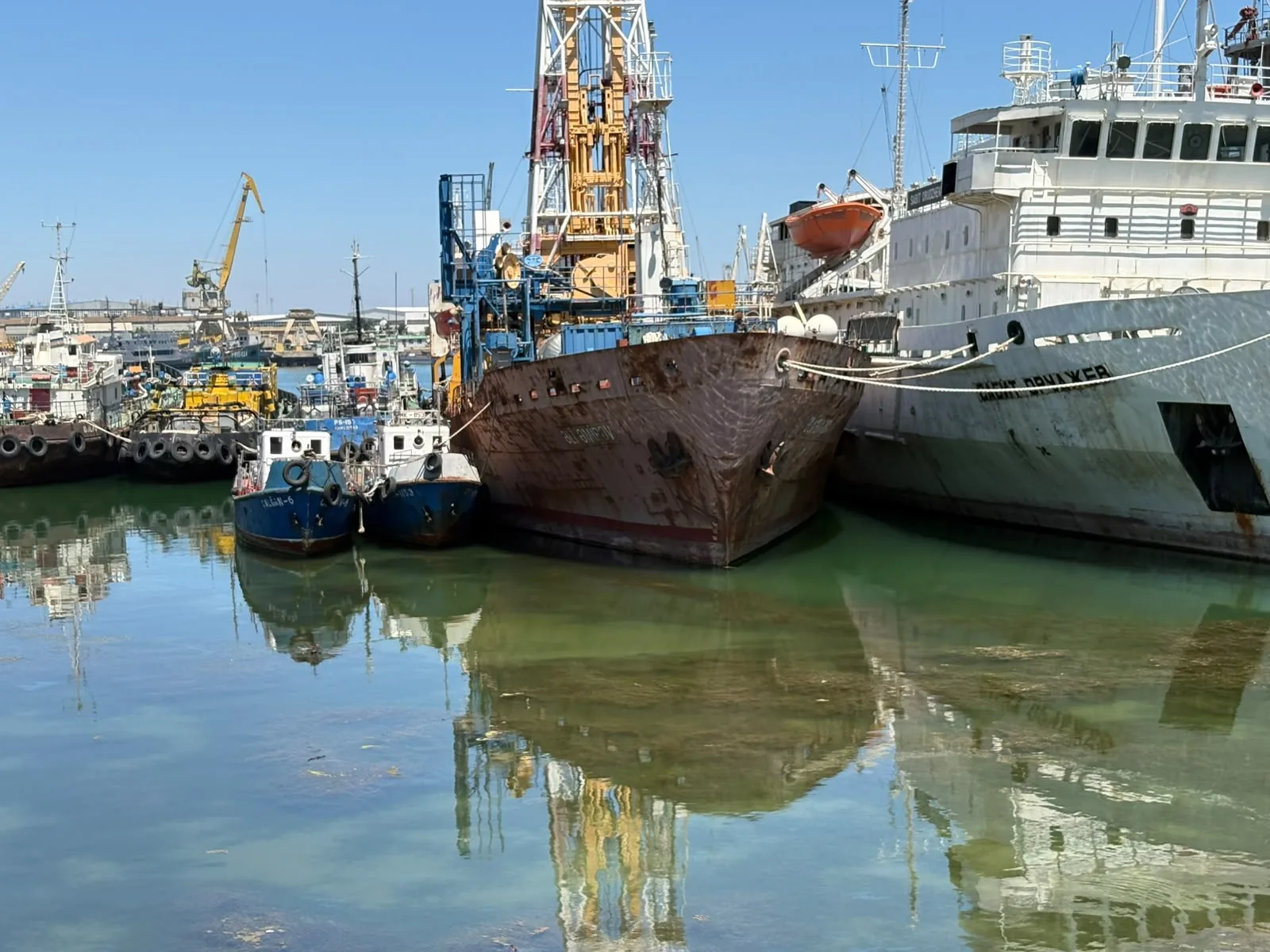
Surakhani Ship Museum & Baku Ship Graveyard: Caspian Heritage Excursion
- About 3.5 hours
- Max 8
- Group & private
Compare tours: prices & duration
| Tour | Duration | Type | From | Rating |
|---|---|---|---|---|
| Baku Boat Tour: Premium Caspian Sea Cruise | 35–40 minutes | — | ₼ 49 | ★ 5.0 (22) |
| James Bond Oil Field, Bibi-Heybat Mosque & Baku Ship Graveyard Tour | About 4 hours | — | ₼ 45 | — |
| Surakhani Ship Museum & Baku Ship Graveyard: Caspian Heritage Excursion | About 3.5 hours | — | ₼ 65 | — |
Frequently asked questions
How do I get to Baku's maritime sites along the coastline?
All of them sit on one road. The Surakhani ship museum is moored at Baku Boulevard in the city centre. From there the coastal highway runs south-west past Shikhov beach toward Bibi-Heybat, about 10 km out. The first-oil-well monument, Bibi-Heybat Mosque and the ship graveyard all fall within the last 3 km of that road. Driving from the museum to Bibi-Heybat takes 20 to 25 minutes. Buses reach the mosque but not the graveyard shoreline, so guided tours combine the sites by vehicle.
Why is so much maritime and oil history concentrated in one place?
Because the two industries were never separate in Baku. The world's first mechanically drilled oil well was sunk at Bibi-Heybat in 1846, directly on the shoreline. Baku then needed ships to move the oil, so the Caspian tanker fleet grew alongside the derricks. The Caspian Shipping Company, now ASCO, still operates from the same coast. Working pumpjacks, refineries, active tankers and decommissioned hulls sit within a few kilometres of each other.
What can I expect to see on a Caspian Sea tour from Baku?
Contrast, mostly. On the preserved side there is a converted Caspian tanker you can walk through, from the engine room to the bridge. On the raw side there is the Bibi-Heybat ship graveyard, where Soviet-era hulls lie beached and are gradually cut apart for steel. Between them stand Bibi-Heybat Mosque with its green domes and an active oil field where pumpjacks still turn. On the water, bay cruises cover the Baku skyline and Crescent Bay from the sea.
Can you swim or sail on the Caspian near Baku?
Yes. The Caspian has no tides and, from late spring to early autumn, very little swell — which is why boat trips and yacht charters run comfortably from the Boulevard marina. Swimming happens at Shikhov and the northern Absheron beaches rather than in the working port. The sea sits about 28 metres below global sea level and is shared by five countries, so conditions off Baku are calm compared with any open ocean coast.
Is the Bibi-Heybat ship graveyard open to visitors?
It is an active shipbreaking shoreline, not a managed attraction. There is no ticket office, no signage and no visitor centre. Visitors view and photograph the hulls from the shore. Boarding the vessels is not permitted and not safe — they are unstable and actively being cut. Guided tours handle access, identify the ships and keep the group on the safe side of the operation.
When is the best time of year for a Caspian tour in Baku?
The coastal tours run year-round, since three of four stops involve very little time outdoors. Spring and autumn bring the most comfortable weather. Afternoon departures suit photographers in any season, because low light turns the rusted hulls copper against the water. Boat trips and yacht charters are best from April to October, when the Caspian is calmest and warmest.