

 EN
 RU
 AR
 HE
Novruz in Baku: Traditions, the Four Tuesdays and Where to See the Festival
A traveller's guide to Azerbaijan's spring new year: the four Tuesdays, the Novruz table and sweets, the street characters and the places in Baku to see it.
 By Kai Wild

Novruz is Azerbaijan's spring new year, held at the vernal equinox on 20 or 21 March, and it is the liveliest time of year to be in Baku. The build-up lasts a month: four Tuesdays, each named after an element, bring bonfires, sprouted wheat on every table and trays of sweets passed between neighbours. For a visitor, the best places to feel it are the Old City and the seafront park, where the city has staged fairs and performances in recent springs. Programmes are announced each year, so treat what follows as a guide to what usually happens, not a timetable.
- When: the equinox, 20 or 21 March; the four Tuesdays fall in the weeks before it.
- What you will see: bonfires, samani (green wheat shoots), khoncha trays, painted eggs.
- What to taste: shekerbura, pakhlava and shorgoghal, baked in almost every home.
- Where in Baku: Icherisheher and the Seaside National Park have hosted the main events.
- Status: a public holiday and part of UNESCO's intangible heritage list.
What Novruz means
Novruz marks the moment day and night become equal and nature starts to wake up. Its roots are far older than any of today's religions, which is why it is shared by many peoples from the Caspian to Central Asia. In Azerbaijan it is above all a family festival: houses are cleaned, new clothes are sewn, quarrels are meant to be settled, and the whole family gathers around the table on the eve. UNESCO first inscribed Novruz on its Representative List of the Intangible Cultural Heritage of Humanity in 2009, together with Azerbaijan and six other countries; the listing was widened to twelve states in 2016 and to thirteen in 2024 (UNESCO listing).
The four Tuesdays before the holiday
Preparations start about a month ahead, and each Tuesday — çərşənbə in Azerbaijani — is given to one of the four elements: Su (water), Od (fire), Yel (wind) and Torpaq (earth). The first is Water Tuesday: by old belief still water starts to move again and is renewed, and girls once walked to mountain springs to bring clean water home. Fire Tuesday is the night of bonfires. The last Tuesday, known as İlaxır or Axır Çərşənbə, is the most important of the four and feels almost like the holiday itself: tables are laid, children play pranks and families visit each other. Local sources list the wind and earth days in a different order, so do not be surprised if two people tell you two versions.
If you are in Baku on one of these Tuesdays in late February or March, look out in the evening for small fires in courtyards and on the edges of parks.
Bonfires, games and the hat at the door
Fire is the symbol people remember. Bonfires are lit on the Tuesdays and on the eve of Novruz, and people jump over them — traditionally seven times — saying "take my yellowness, give me your redness", leaving the tiredness of winter behind. A Novruz fire is never put out with water; it is left to burn down. Children have their own ritual: on the evening of the last Tuesday they leave a hat or a bag at a neighbour's door, knock and hide, and the neighbour fills it with sweets. Egg clashing is the other favourite game — two players tap painted eggs together and the one whose shell survives wins.
Samani, the khoncha and the Novruz sweets
A week or two before the holiday, families sow wheat in a dish so that by the eve it has grown into a bright green tuft. This is samani (also written semeni), tied with a red ribbon and placed in the middle of the khoncha, a large silver or copper tray. Around it go candles — one for each member of the family — painted eggs, nuts, dried fruit and the festival pastries. Each sweet carries a meaning: diamond-shaped pakhlava stands for the four directions of the world, round gogal (shorgoghal) for the sun, crescent shekerbura for the moon, and the eggs for life. On the holiday the main dish is plov, and trays of treats travel between neighbours and relatives. You can buy all three pastries in Baku bakeries during the season — fresh shekerbura is worth seeking out.
Kosa and Kechal: the characters on the street
At public celebrations you will meet two comic figures. Kosa, with his goat's beard and felt hat, stands for winter; Kechal, the bald trickster, stands for spring. They tease each other in verse, and Kechal always wins — winter has to leave. They are joined by Bahar qızı, the "spring girl", along with drummers, rope walkers, wrestlers and folk singers.
Where to experience Novruz in Baku
The city decides its programme each spring, so here is what has happened in recent years, with the year stated:
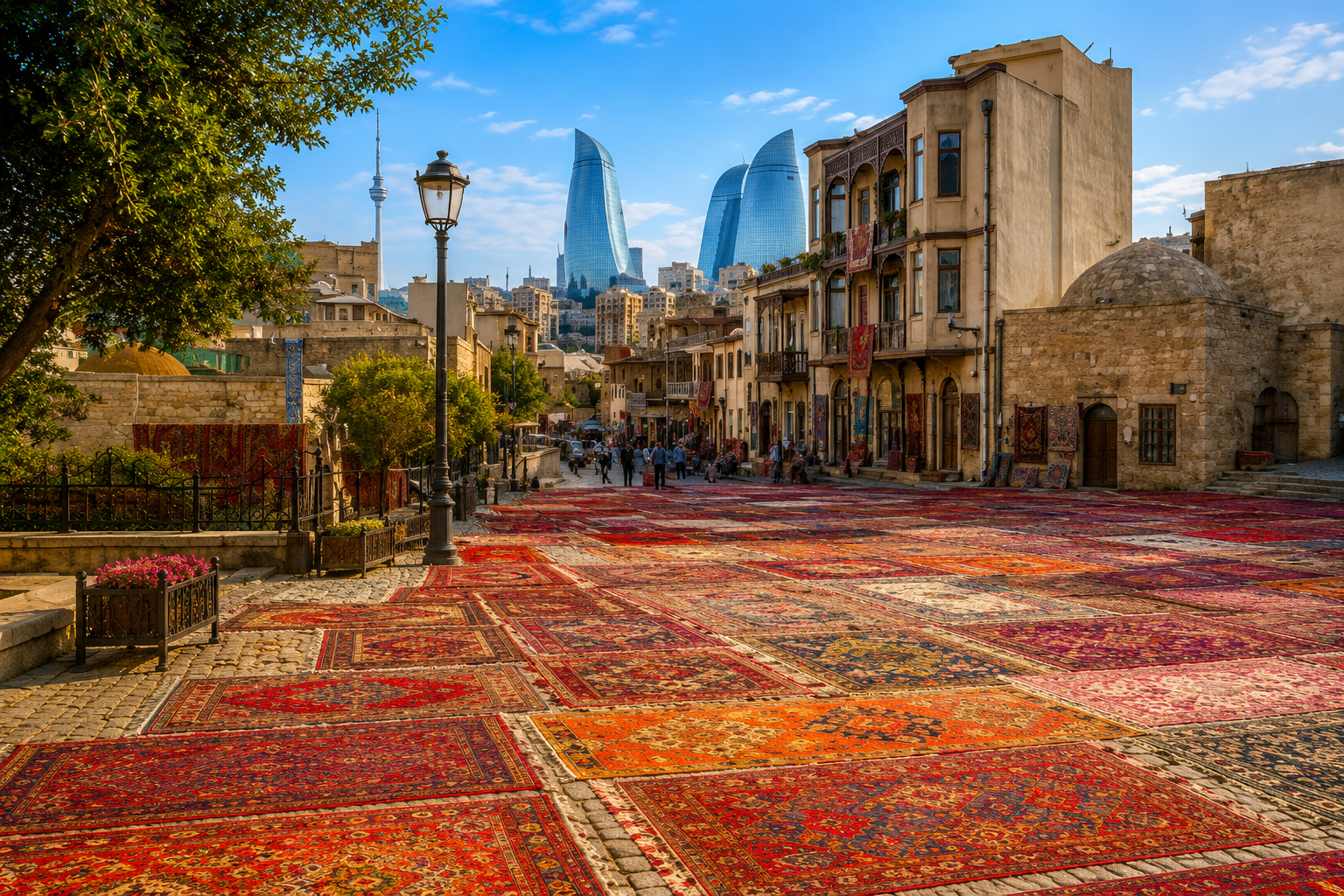
- Icherisheher (Old City): in 2026 the reserve held its "Bahar Qalası" spring festival from 13 March to 7 April (Icherisheher events calendar). In 2019 the national Novruz bonfire was lit in the square in front of the Maiden Tower, with a crafts exhibition in the Old City. By tradition the main festivities gather by the walls of the Maiden Tower, so the walled city is the natural place to start.
- Seaside National Park (the boulevard): in March 2026 a Novruz fair with food stalls and an entertainment area ran in the park along the bay.
- Fountain Square: it hosted a Novruz fair in 2019, close to the Old City gates.
- Neighbourhood parks: in 2025 and again in 2026 the city celebrated in the new park near Ganjlik metro, with a bonfire, Kosa and Kechal, folk crafts, wrestling displays and tea with pakhlava (city announcement, 19 March 2026).
For the coming spring, check the Icherisheher and Baku city announcements from early March. Our Maiden Tower guide and the Baku museums guide will help you fill the hours between events.
Planning a trip around Novruz
- It is a public holiday. The days off are set each year in Azerbaijan's official calendar; check it before you fix your dates.
- Go in the late afternoon. Daylight lasts past 18:00 by late March, and the fires and lights look best at dusk.
- Bring layers. March in Baku can be windy and cool; see our best time to visit Azerbaijan guide.
- Be a good guest. If you are offered a pastry from a khoncha, accept it — sharing is the point of the holiday.
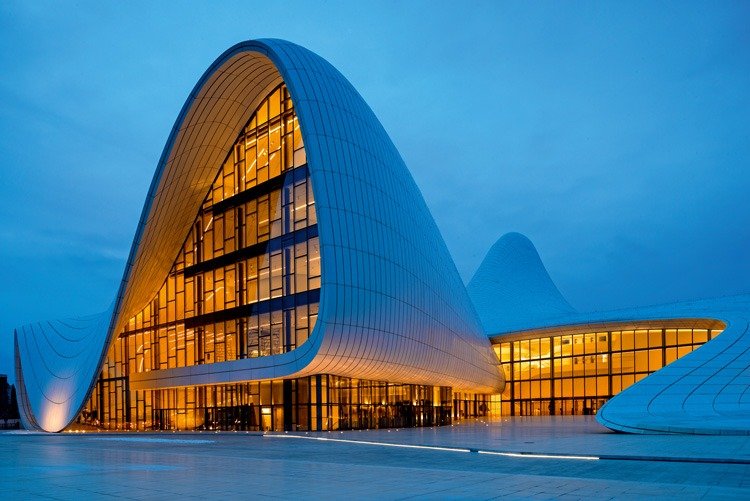
To see the Old City with someone who can explain the lanes and the walls, the Baku Old City tour runs on foot, and the Baku City & Old City tour adds Highland Park and the Heydar Aliyev Center. These are regular tours rather than Novruz events; on private trips hotel pickup is possible, agreed in advance. Outside Baku, Sheki is known for its pakhlava — see what to do in Sheki.
Frequently asked questions
When is Novruz celebrated in Azerbaijan?
On the spring equinox, which falls on 20 or 21 March. The four Tuesdays that lead up to it fall in late February and March. The official days off are published in the national calendar each year.
Is Novruz a good time to visit Baku?
Yes, if you enjoy festivals: in recent years Baku has held Novruz fairs, music and bonfires in the Old City and in the seafront park.
What is samani?
Wheat sprouted at home in the weeks before the holiday and tied with a red ribbon. It sits in the centre of the khoncha tray as the symbol of spring and new growth.
Who are Kosa and Kechal?
Two comic characters of the street celebrations: Kosa represents winter and Kechal represents spring. In their verbal duel Kechal always comes out on top.
Is Novruz on the UNESCO list?
Yes. It was first inscribed on the Representative List of the Intangible Cultural Heritage of Humanity in 2009, and the multinational listing, which includes Azerbaijan, was extended in 2016 and 2024.
Want to see it for yourself?
The trips mentioned above are run by our own team in Baku — licensed English-speaking guides, group or private departures and free cancellation on most tours.
Comments
No comments yet.
Be the first to share your thoughts!
Leave a Comment