
 EN
EN  RU
RU  AR
AR  HE
HE Best Time to Visit Azerbaijan: Month-by-Month Guide (2026)
Spring and early autumn are the sweet spots — but every month here suits a different trip. A month-by-month look at weather, crowds, costs and what is actually worth doing when.
 By Kai Wild

The best time to visit Azerbaijan is late April to early June or mid-September to late October, when the days are mild, the mountains are green and every road in the country is open. There is no bad month here — only months that suit different trips, and this guide gives you everything you need to pick yours: what each month actually feels like, how busy it gets, what it costs, and what is worth booking when you arrive.
The short answer
- Best overall — May, September and October. Warm days, cool evenings, everything open.
- Best for hiking and mountains — June to early October, once the high passes clear.
- Best for the Caspian beaches — July to mid-September.
- Best for skiing — late December to March at Shahdag and Tufandag.
- Best for low prices and empty sights — November to February, outside the New Year week.
- The one to plan around — Novruz, 20–21 March. Wonderful to witness, but the country travels.
Azerbaijan month by month
Daytime highs below are typical for Baku on the coast. The mountains — Gabala, Sheki, Guba, Khinalig — run roughly 5–10°C cooler, and more than that at altitude.
| Month | Baku daytime | What it is like | Best for |
|---|---|---|---|
| January | 5–9°C | Cold wind off the Caspian, quiet streets, lowest hotel rates | Skiing, museums, the Old City with nobody in it |
| February | 5–10°C | Still winter, but the light lengthens noticeably | Skiing, short city breaks |
| March | 9–14°C | Novruz on 20–21 March; blossom in the lowlands, snow still up high | Festivals, city sightseeing, fire sites |
| April | 15–20°C | The country turns green; comfortable for walking all day | Day trips, photography, first hikes |
| May | 20–25°C | Peak green, long daylight, warm but not yet hot | Almost everything — the single best month |
| June | 26–31°C | Hot in Baku, close to perfect in the mountains | Mountains, waterfalls, first swims |
| July | Low 30s°C | Hot and humid on the coast, wind off the sea most days | Beaches, altitude, late evenings |
| August | Low-to-mid 30s°C | The busiest month, with many visitors from the Gulf | Beaches, Gabala and Sheki at altitude |
| September | 25–30°C | Warm days, the sea still swimmable, harvest everywhere | Everything, with better light than summer |
| October | 18–23°C | Golden light, pomegranate season, ideal walking weather | Hiking, mountain villages, food |
| November | 12–17°C | Wetter, first snow on the peaks, city life turns indoors | Museums, tea houses, quiet sightseeing |
| December | 7–11°C | Cold and bright, ski season opens, New Year decorations | Skiing, city breaks, winter photography |
Spring: April to June
Spring is when Azerbaijan looks like the photographs. The semi-desert around Baku greens over for a few weeks, the Caucasus foothills fill with wildflowers, and the temperature sits in the range where you can walk all day without thinking about it.
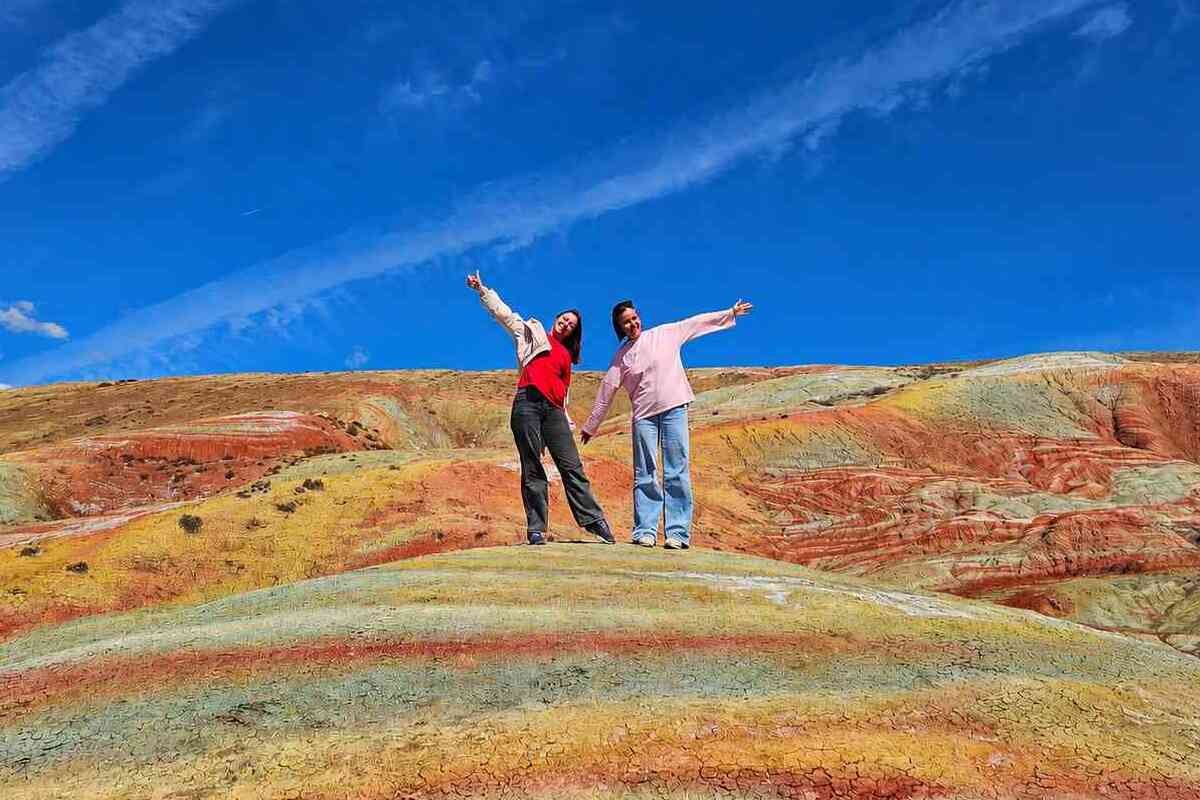
This is the best window for the long day trips, because the drive is as good as the destination. The Gabala & Shamakhi Day Tour (from ₼79) crosses the foothills when they are at their greenest, and the Shahdag, Guba & Khizi Day Tour (from ₼59) reaches the Candy Cane Mountains before the summer haze flattens the colour out of them.
One caveat: high mountain roads clear late. If Khinalig or the Laza waterfalls are the reason you are coming, aim for June rather than April.
Summer: July and August
Baku in high summer is hot, humid and windy — the wind is the saving grace, and the reason the city is nicknamed the place of winds. Sightseeing works early and late; the middle of the day belongs to the sea or the shade.
The move most travellers make is to gain altitude. Sheki and Gabala are noticeably cooler than the coast, which is why the Sheki Day Trip (from ₼89, about 13 hours with an English-speaking driver-guide) stays popular right through August. Waterfall and lake routes such as the Laza Mujug Waterfalls Hike (14 km, from ₼650) are at their best now, with the passes fully open.
On the coast itself, the Caspian is warm from July onwards — see our guide to the best beaches in Baku — and a sunset Caspian cruise (from ₼49) is a better use of a hot evening than another walk along the boulevard. August is the busiest month of the year, so group departures fill up first; book ahead if your dates are fixed.
Autumn: September and October
If you can only travel once, come now. September keeps summer's warmth without the humidity and the sea stays swimmable well into the month. October brings the best light of the year, the pomegranate and quince harvest, and hillsides turning over in the Talysh and the Greater Caucasus.
Everything is open and nothing is crowded, which makes it the right time for an itinerary that moves. The 5-Day Azerbaijan Tour (from ₼360) links Shamakhi, Gabala, Guba and Sheki while the weather still cooperates in all four. For a single big day out, Guba & Khinalig (from ₼89) is at its most striking in October, before the first snow closes the top of the road.
Winter: November to March
Winter is the underrated season. Baku rarely gets properly cold — it hovers a few degrees above freezing rather than below — but the wind makes it feel sharper than the number suggests, so pack accordingly. In exchange you get the Old City to yourself, hotel rates at their lowest, and restaurants where you do not need a table booked.
The indoor and short-format trips come into their own: the Baku Old City Tour (from ₼25, two hours) and the Baku Night Tour (from ₼29) both work better without a crowd, and winter darkness falls early enough that the Flame Towers light show is an early-evening event rather than a late one. The fire sites make particular sense in the cold — the Gobustan, Mud Volcanoes, Ateshgah & Yanardag tour (from ₼39) is a full eight-hour day, and a burning hillside is more impressive in January than in July.
For a fuller picture of the city between December and February, including how New Year is marked here, read Baku in winter and at New Year.
For snow, Shahdag and Tufandag run roughly from late December to March. And if you are here on 20–21 March for Novruz, the spring new year, expect bonfires, sweets and genuine celebration — along with a country in motion and accommodation booked out in the regions.
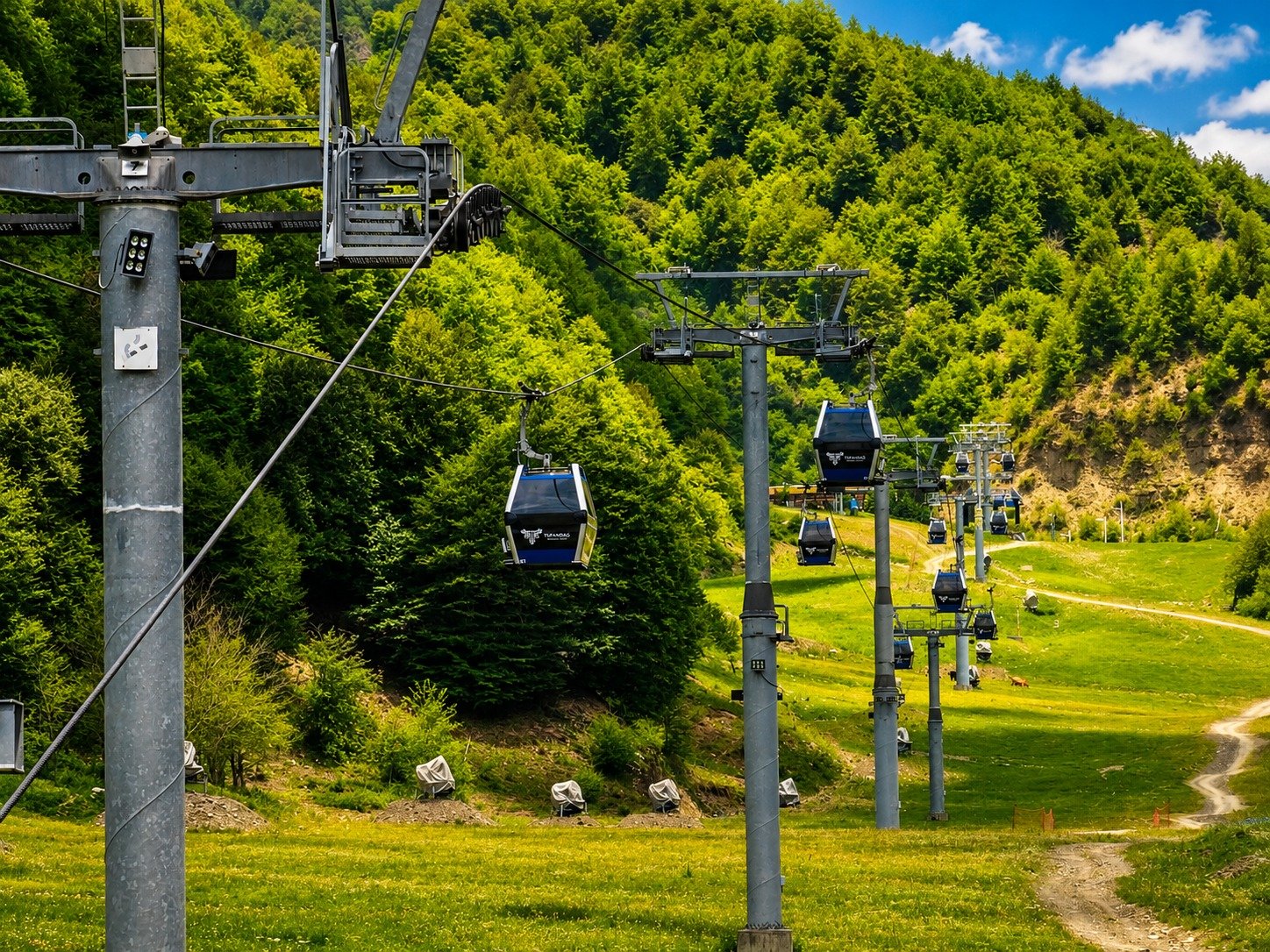
Tufandag sits above Gabala, and our guide to Gabala in winter: Tufandag and the cable car walks through the snow season there and the drive from Baku.
Choosing by what you came for
- Hiking and summits — June to early October. High routes such as the Bazarduzu climb are summer-only for good reason.
- Beaches and the Caspian — July to mid-September.
- Photography — late September and October, for the low light and the harvest colour.
- Food — autumn, when the pomegranates, quinces and grapes all land at once.
- Budget — November to February, excluding the New Year week.
- Skiing — January and February for the most reliable snow.
Frequently Asked Questions
What is the single best month to visit Azerbaijan?
May, narrowly ahead of September and October. May gives you green mountains, comfortable temperatures and long daylight, with the high roads open in all but the worst years.
Is Azerbaijan too hot in summer?
Baku is hot and humid in July and August, with daytime highs in the low-to-mid 30s°C, but the coastal wind takes the edge off and the mountains stay far cooler. Plan sightseeing for the morning and evening and spend the middle of the day at altitude or by the sea, and summer works perfectly well.
Is it worth visiting Azerbaijan in winter?
Yes, if you want the cities rather than the mountains. Baku in winter is cold and windy but rarely freezing, prices are at their lowest, the major sights are empty, and the ski resorts at Shahdag and Tufandag are running. High mountain villages are the part you may have to give up.
When is the rainiest time in Azerbaijan?
Autumn and early winter are the wettest across most of the country, and the subtropical south around Lankaran and Lerik is the wettest region in any season. Baku itself is dry year-round — it gets less rain than most European capitals.
How far ahead should I book a tour?
For travel in May, September or October, two to four weeks is comfortable. For August and for the New Year and Novruz periods, book as early as your dates are certain — group departures on those dates go first.
Next steps
Once you have your month, two things settle the rest of the plan: how many days you need, and whether you need a visa — most nationalities do, and our Azerbaijan e-visa guide covers the process. For the wider picture on safety, costs and getting around, start with the Azerbaijan travel guide, then browse day trips from Baku for what fits your season.
Want to see it for yourself?
The trips mentioned above are run by our own team in Baku — licensed English-speaking guides, group or private departures and free cancellation on most tours.
Comments
No comments yet.
Be the first to share your thoughts!
Leave a Comment