 EN
EN  RU
RU  AR
AR  HE
HE 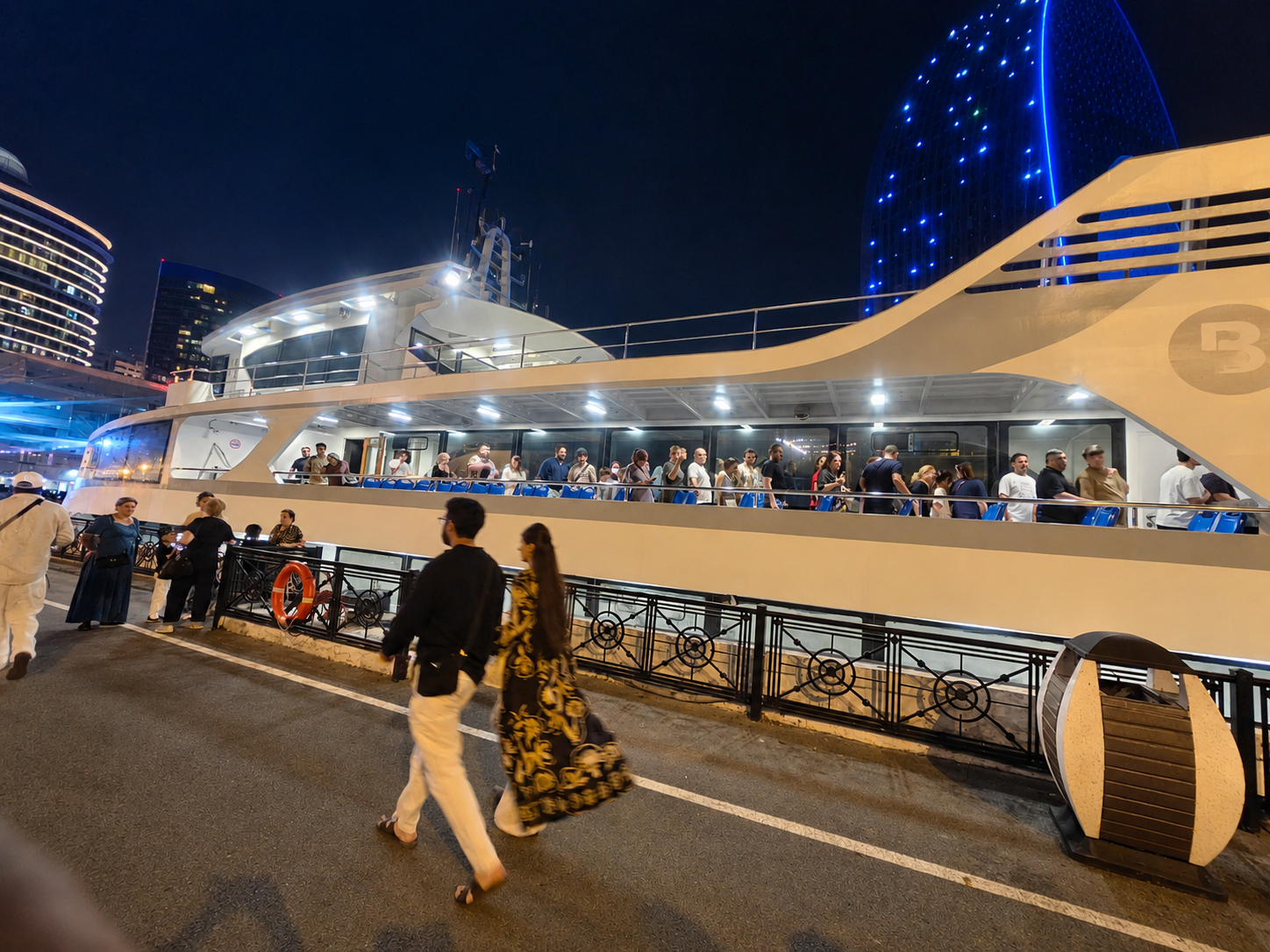
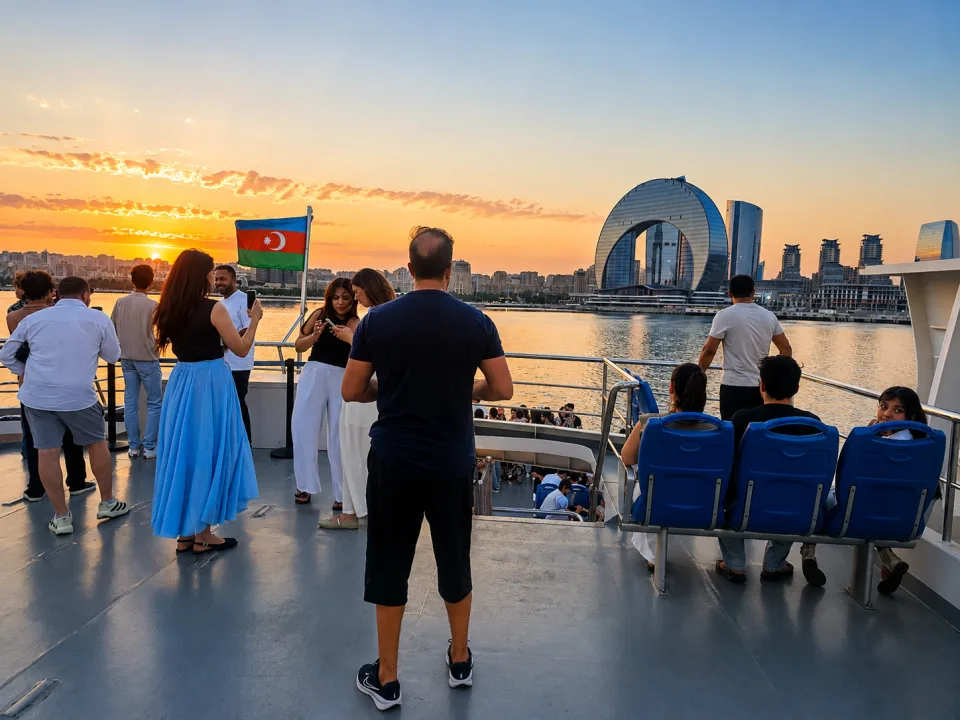
See Baku from its most spectacular angle — the water. Step aboard a three-deck liner and glide out onto the Caspian Sea as the whole architectural amphitheatre of Azerbaijan's capital opens up in front of you. This guided Baku boat tour is the only way to get that postcard view of the Flame Towers — an angle you simply cannot get from land.
And this is a guided cruise, not just a boat ride. You sail from the reserved VIP deck with a cup of Azerbaijani tea in hand, while your guide talks you through the skyline in front of you — the towers, the bay, Nargin Island and the stories behind them.
What's Included
- VIP upper deck — the best seats on the boat, already reserved for you.
- Live guide on board — real commentary, not a silent boat ride.
- A cup of Azerbaijani tea — included with your cruise, from the on-board café.
- Small group — a maximum of 10 guests, so your guide is always within earshot.
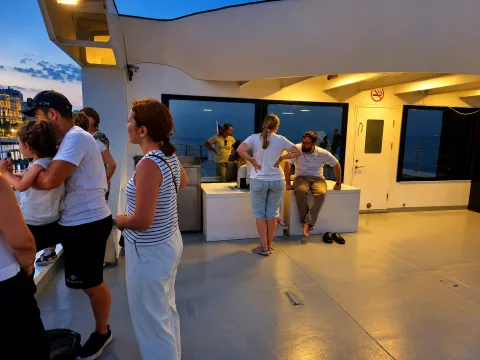
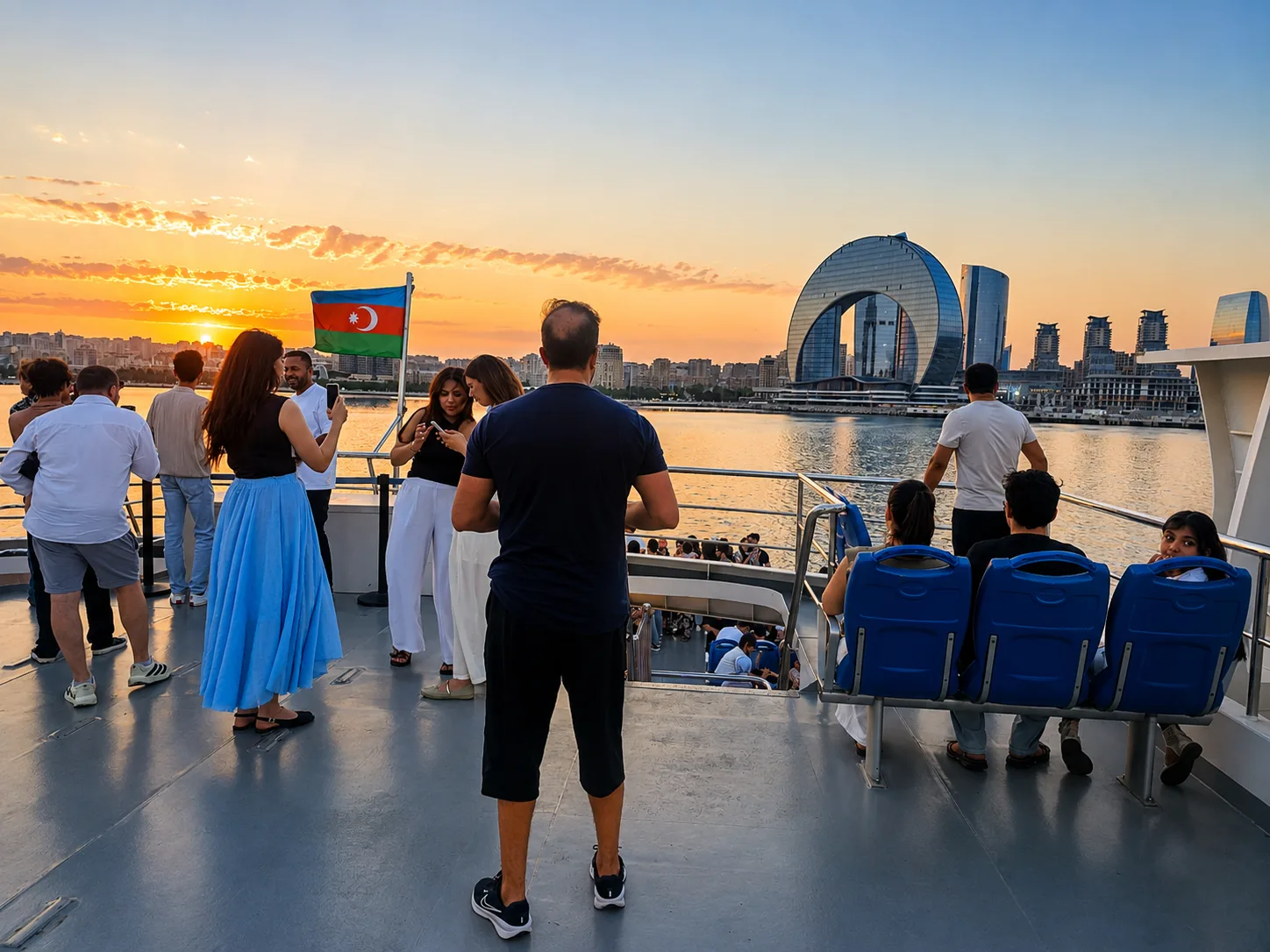
- Seating for any weather — the open-air VIP deck for photos, climate-controlled panoramic salons if the Caspian wind picks up.
- Safety on board — life jackets and accessible boarding ramps for guests with limited mobility.
Why Take This Baku Boat Tour
Plenty of boats leave the Baku Promenade. What sets this cruise apart is what happens on board.
- You sail from the VIP upper deck. Open air, unobstructed sightlines and space to move — the best position on the boat for photographs of the Flame Towers and the sweep of Baku Bay.
- A guide sails with you. Every landmark, island and stretch of shoreline is explained as it appears, so the skyline stops being a pretty backdrop and starts being a story.
- The stories, not just the view. The Caspian's wildlife, the oil boom that built the boulevard, the darker history of Nargin Island — context the shoreline never gives away on its own.
- The group stays small. Up to 10 guests, close enough to your guide to ask questions and get real answers.
Thirty-five to forty minutes on the water, and you come back understanding the city you have been photographing.
Tour at a Glance
- Duration: a scenic 35–40 minute sailing along the Baku seafront.
- Departures: daily, between 14:00 and 21:00 — sunset sailings are the most popular.
- Format: a relaxed small-group cruise, guided in English and Russian.
- Suitability: very family-friendly; children under 6 sail free.
- Weather: in strong Caspian winds the boat trip is rescheduled or fully refunded.
What You'll See from the Water
As the liner traces the curve of the bay, the city opens up like a stage:
- The sea façade of Baku — the Promenade unfolding as an amphitheatre, the same seafront you can walk with our Baku Old City tour.
- "Little Venice" & the Carpet Museum — the canals and the carpet-shaped museum from a brand-new angle.
- Baku Crystal Hall — the faceted arena across the bay that hosted Eurovision 2012.
- The Baku Eye — the Ferris wheel on the far shore of the bay, framed against open sea.
- National Flag Square — one of the world's tallest flagpoles, standing clear across the water.
- Nargin Island — the low island guarding the bay, with a history most visitors never hear.
Pair the cruise with a daytime Baku city tour, or explore the UNESCO-listed walled quarter on our Baku Old City tour.
Your Guide's Stories — Tap to Open
What turns 40 minutes on the water into the story you retell at home is the commentary. Here's a taste — open whichever one interests you.
The Caspian: a sea that's really a lake
You're on the largest enclosed body of water on Earth — about 371,000 km², bigger than Germany, with no outlet to any ocean. Its surface sits roughly 28 metres below global sea level, and the water is brackish rather than salty — about a third of ocean salinity, because the Volga pours in vast amounts of fresh water from the north. It's the surviving remnant of the ancient Paratethys Sea, cut off millions of years ago. That isolation is why so much of what lives here lives nowhere else. ExplorerBulletin has a fuller explainer on why the Caspian's sea-or-lake status mattered to five governments, and why its water level is now falling.
Seals, sturgeon and the story of caviar
The Caspian has its own endemic marine mammal — the Caspian seal, the only seal on Earth confined to an inland sea, and now endangered. Below you swim the sturgeon: beluga, ossetra, sevruga, prehistoric fish that can outlive a human.
For most of the twentieth century this basin supplied the majority of the world's wild caviar, and Baku sat at the centre of that trade. Overfishing collapsed the wild stocks, wild catch is now tightly restricted by international agreement, and Azerbaijan's caviar comes from sturgeon farms — which is why a real tin is both legal and eye-watering. Your guide will also point out the gulls, cormorants and, in season, the migratory flocks using the Caspian flyway.
Five countries, one sea
Five states share this shoreline: Azerbaijan, Russia, Kazakhstan, Turkmenistan and Iran. Because the Caspian is legally neither a true sea nor a simple lake, dividing it took decades — the framework Convention on its legal status was only signed at Aktau in 2018, and some seabed boundaries are still open.
Azerbaijan settled its seabed lines with Kazakhstan and Russia around the turn of the century, and after a long dispute reached an understanding with Turkmenistan on a jointly developed offshore field. Iran, on the southern shore, takes a different view of how the water should be split. The sea is also a trade artery: the "Middle Corridor" runs cargo from China across Kazakhstan and Turkmenistan, over these waters to Baku, and on to Europe — which is why you'll see tankers waiting out in the roadstead.
Baku Bay: the harbour that built an oil empire
The crescent you're sailing in is the reason Baku exists. It's a naturally sheltered deep-water harbour — a rarity on this coast — and it made the city a port long before oil. Then came the boom: by around 1900 the Baku region was pumping close to half the world's oil, drawing in the Nobel brothers, the Rothschilds and a generation of local oil barons whose mansions still stand a few streets up from the shore. The money from those wells built the boulevard you're looking at.
Nargin Island (Böyük Zirə) and its darker past
That long, low island guarding the mouth of the bay is Böyük Zirə, better known by its Russian-era name, Nargin. Its history is far darker than its silhouette suggests. Under the Russian Empire it served as a remote internment camp holding thousands of Ottoman and other prisoners of war during the First World War, where disease and neglect killed many of them. In the Soviet decades it became a closed military zone — off-limits, unmarked on tourist maps. It stands empty today, and the ambitious redevelopment plans announced for it have never been built.
Reading the shoreline: Neftchilar Avenue, the Flag, the TV Tower
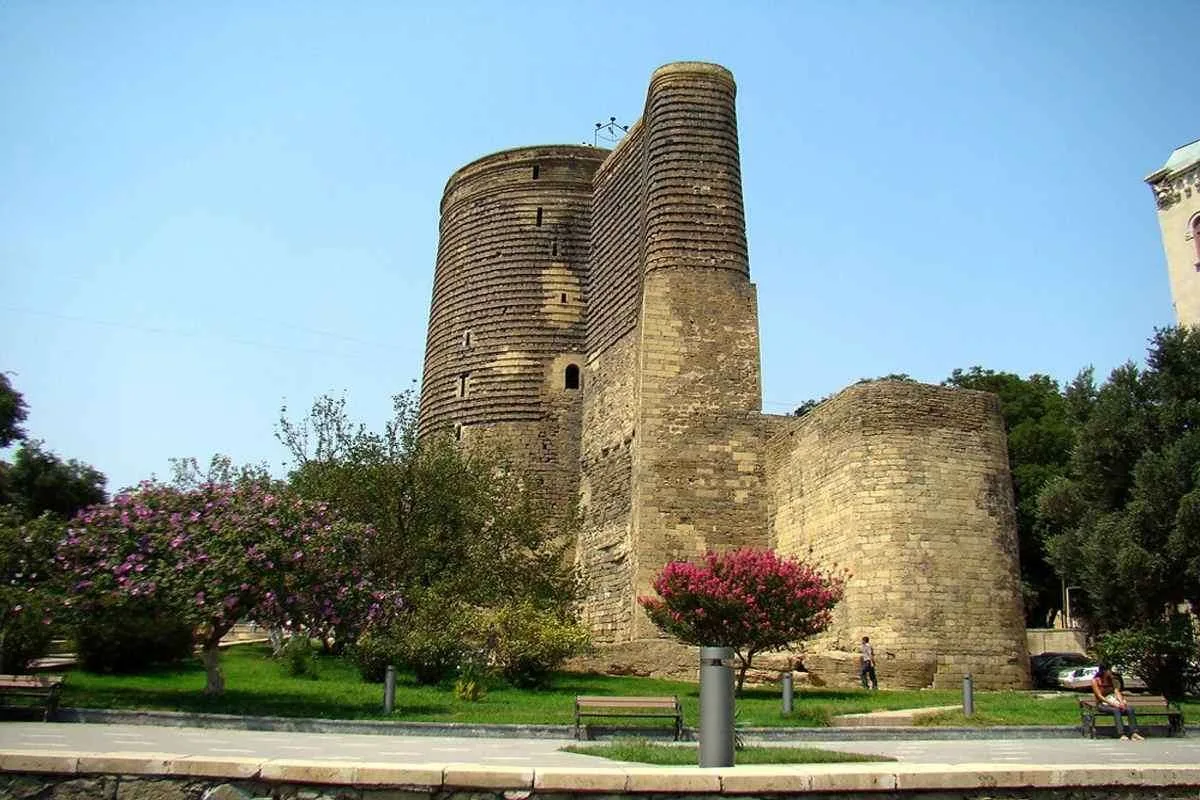
The wall of buildings along Neftchilar Avenue — "Oilmen's Avenue" — is the city's timeline in a single row. The monumental Stalin-era Government House anchors the western end; beside and behind it stand the Soviet-era Absheron hotel block, the mirrored towers of the business district, and the sandstone Old City climbing uphill with the Maiden Tower at its edge. Above it all, the three Flame Towers — and on the ridge behind them the 310-metre Baku TV Tower, the tallest structure in the country, begun in Soviet times and finished after independence.
White City: how the Black City turned white
Sweep east and the mood changes. National Flag Square raises one of the world's tallest flagpoles over the water — deliberately oversized, deliberately visible from every boat entering the bay — with the faceted Crystal Hall beside it. Beyond lies White City (Ağ Şəhər), built on the ground of the old Black City: the soot-blackened refinery district that was once the most polluted quarter in the Caucasus, now cleared and rebuilt as a modern residential and business zone. Watching the black city turn white, from the deck of a boat, is the single best way to understand what Baku has been doing with itself for twenty years.
On Board
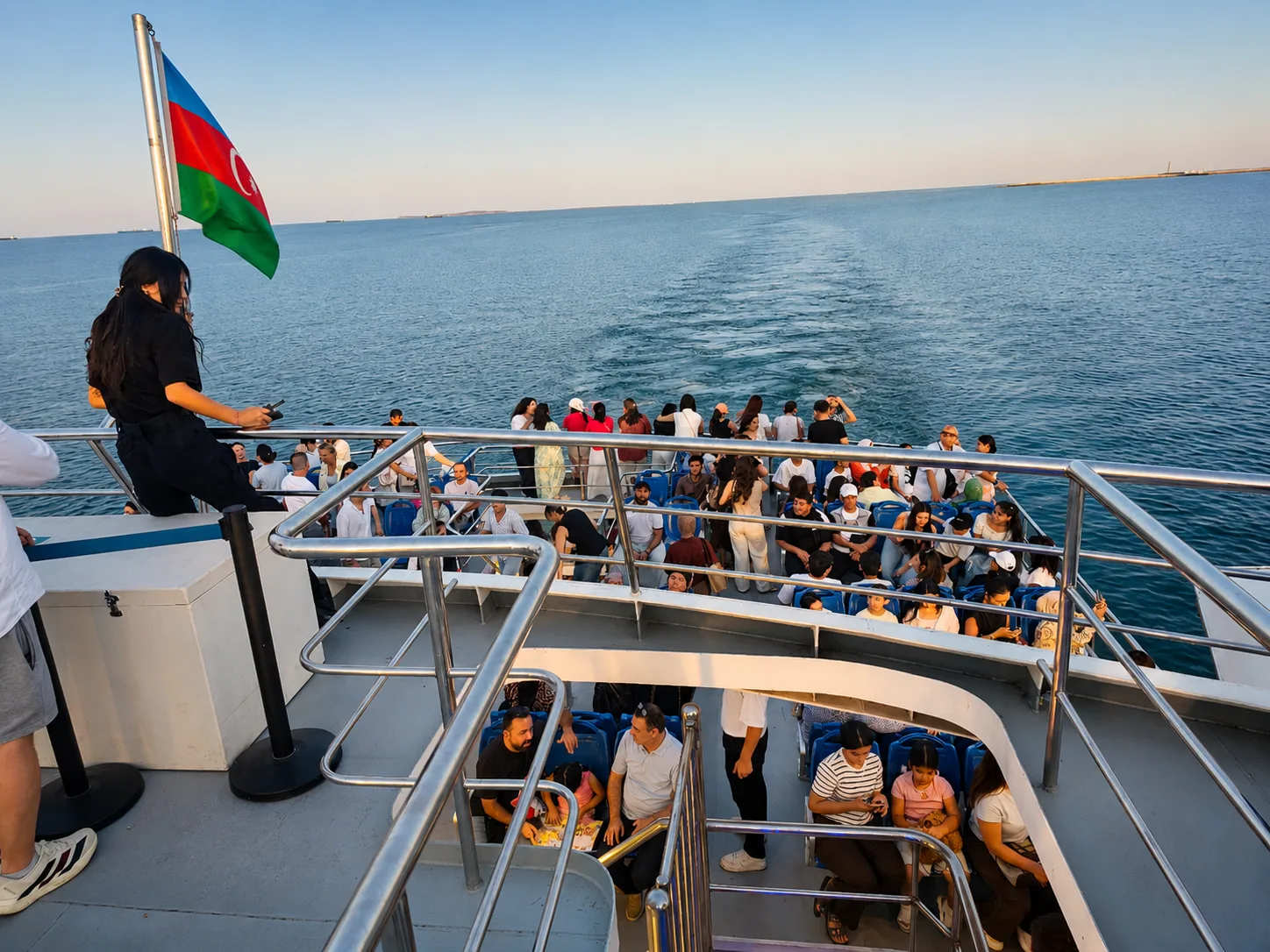
- All-weather decks: two enclosed, climate-controlled salons with panoramic windows for windy days, plus the open-air VIP deck for photos.
- Tea and café: your cup of tea is included, served from the on-board café; a traditional Chay Dəsti set with local jams and sweets, cold drinks and light snacks are also available.
- Safety & access: life jackets on board, and accessible boarding ramps for guests with limited mobility.
Meeting & Departure Point
The boat trip departs from a central pier on the Baku Promenade, beside the main city-centre attractions and Park Boulevard mall. Your exact boarding point and meeting time are sent the moment your booking is confirmed.
Pair Your Cruise with More of Baku
A Caspian cruise is the perfect centrepiece for a day by the sea. Keep exploring with our wider range of things to do in Baku, plan further afield with these day trips from Baku, or stay on the coast with the Baku flamingo & Absheron coast tour. Curious about that faceted arena across the bay? Read how Eurovision 2012 reshaped Baku's seafront. Browse all our Baku tours to build the rest of your trip.
Ready to see Baku from its best angle? Book your guided Caspian Sea cruise — VIP deck, a live guide beside you, and every building on that skyline explained.
Book with confidence: confirmation is instant and there's no payment today. Questions first? Tap the green WhatsApp button — our Baku team replies within minutes.